Stand face-to-face with history’s most celebrated artistic treasures. No visit to Paris is complete without witnessing the enigmatic smile of the Mona Lisa or the graceful elegance of the Venus de Milo. Beyond these icons, the Louvre’s vast corridors offer an unparalleled journey through thousands of years of human creativity, from ancient civilizations to the height of the Renaissance.
Unveiling the Masterpieces: What Awaits You Inside
While the Louvre is home to over 35,000 works of art, a few iconic pieces have captured the world's imagination. When you visit, these are the treasures that define the experience.
The Enigmatic Smile Your journey often begins in the Denon Wing, home to the museum’s most famous resident: The Mona Lisa. Painted by Leonardo da Vinci in the early 16th century, her gaze follows visitors across the room. While the painting is smaller than many expect, the technique of sfumato (soft blurring) and the mystery surrounding the subject make it a magnetic focal point of the museum. Tip: Don’t forget to turn around! Directly opposite the Mona Lisa hangs the largest painting in the Louvre, "The Wedding Feast at Cana" by Veronese.
Timeless Beauty in Stone Descending into the galleries of Greek Antiquities, you will find the Venus de Milo. Discovered on the island of Milos in 1820, this statue is the embodiment of classical female beauty. Her missing arms have only added to her allure, inviting centuries of speculation about what she might have been holding. Nearby, the Winged Victory of Samothrace stands triumphantly at the top of the Daru staircase. With her clothes clinging to her body as if blown by a sea breeze, she represents the goddess Nike announcing a naval victory.
The Power of French Romanticism The Louvre is also the premier destination for large-format French paintings. Stand before Liberty Leading the People by Eugène Delacroix, a powerful symbol of the French Revolution. The dynamic composition and the tricolor flag held high make it one of the most stirring images in art history.
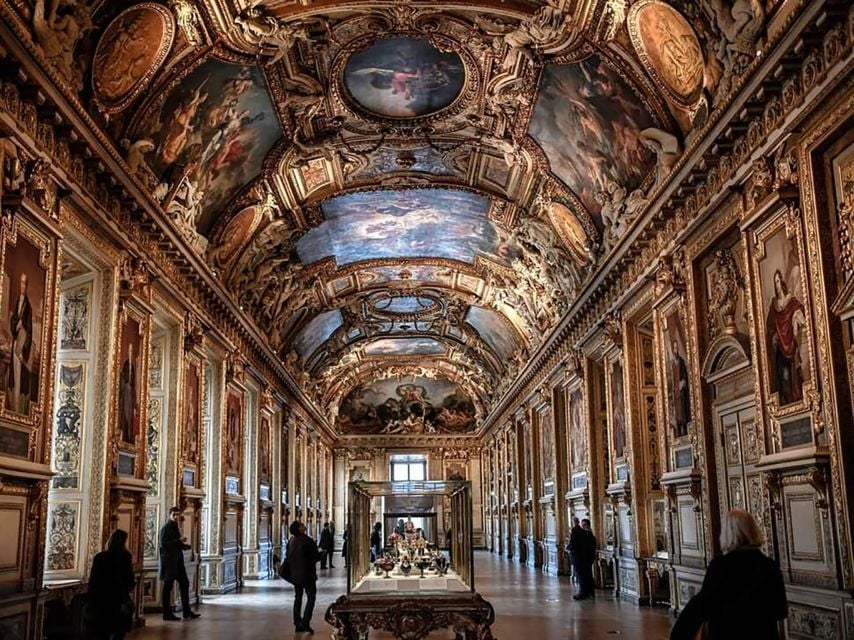
More Than Just Art As you move between these masterpieces, remember to look up. The museum itself is a work of art. The Galerie d'Apollon, with its gilded ceilings and royal portraits, served as the inspiration for the Hall of Mirrors at Versailles and offers a glimpse into the opulent lives of France's kings.